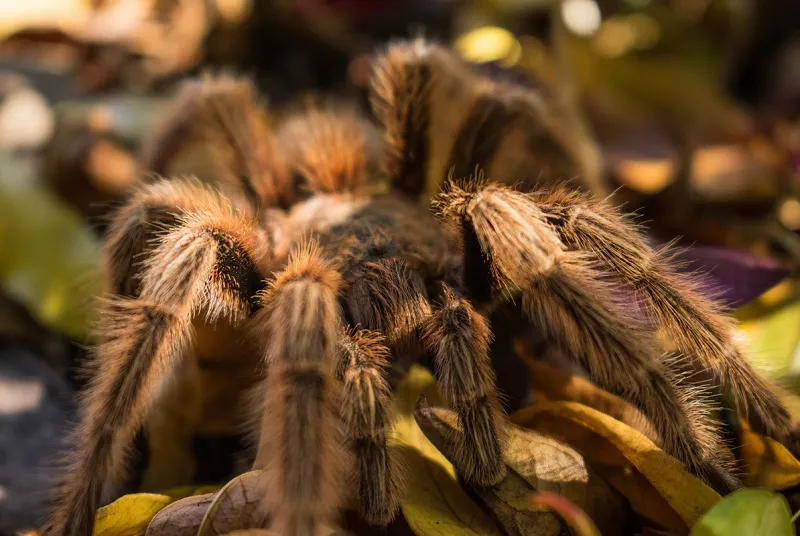
What Makes Tarantulas So Resilient?
Tarantulas, with their imposing size and sometimes intimidating appearance, are remarkably resilient creatures. Their ability to survive and thrive in diverse environments is a testament to their unique set of survival traits. From arid deserts to humid rainforests, these arachnids have evolved ingenious strategies to overcome challenges posed by predators, environmental conditions, and the pursuit of sustenance. The secrets to their survival lie in a combination of physical adaptations, behavioral patterns, and physiological mechanisms that allow them to persist across different habitats. Understanding these traits not only deepens our appreciation for tarantulas but also provides valuable insights into the wonders of natural selection and adaptation within the animal kingdom. They are living marvels.
Exoskeleton Armor The Tarantula’s First Line of Defense
One of the most crucial tarantula survival traits is their robust exoskeleton. This external skeleton, composed primarily of chitin, serves multiple purposes, including providing structural support, protection against predators, and preventing water loss. The exoskeleton acts as a tough, armor-like shield, making it difficult for predators to penetrate. The hard outer layer protects the tarantula’s delicate internal organs from physical damage, which is essential for their survival in environments where encounters with other animals are common. Its rigid structure also helps in locomotion, allowing the tarantula to move efficiently across various terrains. This external skeleton is an essential component of their ability to thrive, contributing significantly to their overall resilience and adaptability in diverse habitats. It’s the first line of defense.
Molting The Renewal Process

The process of molting, or shedding their exoskeleton, is a crucial survival mechanism for tarantulas. As they grow, the rigid exoskeleton becomes too small, and they must replace it with a new, larger one. Molting allows tarantulas to grow in size and repair any damage to their bodies. This process is vulnerable as they are very soft when the new exoskeleton forms, so they hide. During molting, the tarantula absorbs water, which helps to split the old exoskeleton. They then wriggle out of their old shell, leaving behind a near-perfect replica of themselves. The new exoskeleton is initially soft and flexible, gradually hardening over several days. This renewal process is not only essential for growth but also allows for the repair of injured limbs or the replacement of lost hairs. Molting is a physically demanding process, but it is necessary for the tarantula to survive and thrive.
Regrowing Lost Limbs
Tarantulas possess an impressive ability to regenerate lost limbs, which is another remarkable survival trait. If a tarantula loses a leg due to predation, injury, or during molting, it can regrow the limb over several molting cycles. The regeneration process is not immediate; it occurs gradually with each molting. The new leg starts as a small bud and progressively grows larger with each molt, eventually reaching its full size and functionality. This regenerative capability is a significant advantage in the wild, as it allows tarantulas to recover from injuries and maintain their mobility for hunting, escaping predators, and mating. The ability to regenerate lost limbs significantly enhances their chances of survival in challenging environments, making them even more resilient.
Camouflage and Cryptic Coloration
Many tarantula species employ camouflage and cryptic coloration as a vital survival strategy. Their coloration often blends seamlessly with their surroundings, making them difficult for predators to spot. This ability to blend in helps tarantulas to avoid detection by birds, reptiles, and other animals that prey on them. Some tarantulas have colors that mimic the environment like the desert, while others have colors that blend with the bark of trees or the forest floor. Camouflage is a crucial part of the hunting strategy. By remaining unseen, tarantulas can ambush their prey, increasing their chances of securing a meal. This makes them masters of disguise. Therefore, camouflage and cryptic coloration are essential for tarantula survival.
Burrowing and Habitat Selection

Tarantulas are adept at selecting and utilizing specific habitats that provide protection from predators and harsh environmental conditions. Many tarantula species are burrowers, constructing elaborate underground homes where they can retreat during the day, avoid extreme temperatures, and conserve moisture. These burrows offer shelter from both predators and the elements. The depth and design of a tarantula’s burrow can vary depending on the species and the environment, with some tarantulas creating silk-lined tunnels. Habitat selection is crucial for their survival, and they often choose locations that offer a balance of shelter, access to prey, and suitable environmental conditions. Understanding and utilizing these habitats are the key to their survival.
Dietary Adaptations Feeding Strategies
Tarantulas are opportunistic predators, and their feeding strategies are adapted to suit their environment. They primarily feed on insects, but they can also prey on small vertebrates such as lizards, frogs, and even small mammals. Their hunting strategies vary depending on the species. Some tarantulas are ambush predators, waiting patiently for prey to come within range. Others actively stalk and pursue their meals. Their venom contains neurotoxins that immobilize or kill their prey, allowing the tarantula to consume it safely. These spiders have strong chelicerae (jaws) that help crush their food. The efficiency of their feeding strategies and their ability to eat different types of food are crucial to tarantulas’ survival, ensuring they can obtain the necessary nutrients for their survival.
The Importance of Water and Hydration
Water is essential for tarantulas’ survival, and they have developed strategies to obtain and conserve it. They absorb water through their food, especially insects and other prey. They also drink water from droplets, puddles, or other sources in their environment. In arid environments, they may construct their burrows near sources of moisture, such as underground springs or damp soil. Maintaining proper hydration is critical for several physiological functions, including molting, digestion, and overall health. Dehydration can be fatal, so tarantulas have evolved behaviors and adaptations to ensure they stay hydrated. Water is critical for all their functions.
Sensory Abilities Helping Tarantulas Thrive

Tarantulas possess highly developed sensory abilities that aid in their survival, enabling them to detect prey, avoid predators, and navigate their environment. These sensory systems work in concert to provide the tarantula with information about its surroundings, facilitating effective hunting, defense, and reproduction. They have multiple senses to keep them safe.
Chemoreception Detecting Prey and Predators
Tarantulas use chemoreception, the ability to detect chemicals in their environment, to locate prey and identify potential threats. They have sensory organs on their legs and pedipalps (small appendages near the mouth) that can detect chemicals released by prey and predators. These sensory abilities allow tarantulas to identify suitable food sources and avoid dangerous situations. This chemoreception is crucial for hunting and survival.
Vibration Sensing
Tarantulas are highly sensitive to vibrations, which they use to detect movement in their environment. They have specialized sensory hairs on their legs and bodies that can detect even the slightest vibrations in the ground or air. This ability is essential for detecting the presence of prey, as well as for detecting the approach of predators. Vibration sensing helps tarantulas react quickly to potential threats. These vibrations can tell the tarantula if there is food nearby or danger.
Venom as a Survival Tool

Tarantulas are venomous spiders, and their venom is a crucial survival tool for both hunting and defense. The venom contains a mixture of toxins, including neurotoxins, that paralyze or kill their prey. It also helps in the pre-digestion of food. The venom helps to break down the prey’s tissues, making it easier for the tarantula to consume. Venom is also used defensively. If threatened, tarantulas can inject venom into predators, deterring them and allowing the tarantula to escape. This venom is not usually dangerous to humans.
Mating and Reproduction Strategies
Tarantulas employ specific mating and reproduction strategies to ensure the continuation of their species. Males often use elaborate courtship rituals to attract females, which may include drumming on the ground or waving their legs. Once a female accepts a male, he deposits sperm into her reproductive tract. The female then lays her eggs in a silk-lined nest, and she carefully tends to them until they hatch. The survival of the offspring is crucial, and the female will stay with the young ones for a while to protect them. These mating and reproductive behaviors are essential for maintaining tarantula populations.
Lifespan and Longevity
Tarantulas are known for their relatively long lifespans, especially compared to many other arachnids. Some species can live for several decades, with females often living longer than males. This longevity is another aspect of their survival strategy, as it allows them to reproduce multiple times throughout their lives. The slow metabolism and the protection they get from their burrows also contribute to their long life. This long lifespan is an advantage in habitats where environmental conditions may fluctuate.
Conclusion Tarantula’s Thrive

Tarantulas’ survival traits are a fascinating example of adaptation and resilience. Their ability to thrive in a variety of environments is due to a complex interplay of physical, behavioral, and physiological adaptations. From their protective exoskeleton and regenerative capabilities to their camouflage, hunting strategies, and sensory abilities, tarantulas have evolved a suite of traits that enable them to overcome challenges and persist in the wild. By understanding these survival secrets, we can better appreciate the remarkable adaptability of these ancient creatures and the incredible diversity of life on Earth.