The Extraordinary Eyes of Tarantulas
Tarantulas, with their often intimidating size and appearance, possess a visual system that is both fascinating and crucial to their survival. While they may not boast the complex eyes of some insects or the dynamic vision of vertebrates, the eyes of a tarantula are perfectly adapted to their lifestyle. This article delves into the intricacies of tarantula vision, exploring the number of eyes, their arrangement, how they function, and the crucial role they play in hunting, navigating, and surviving in the wild. Understanding tarantula eyesight provides a glimpse into the sensory world of these captivating creatures and highlights the remarkable adaptations that have allowed them to thrive for millions of years.
Number of Eyes and Their Arrangement
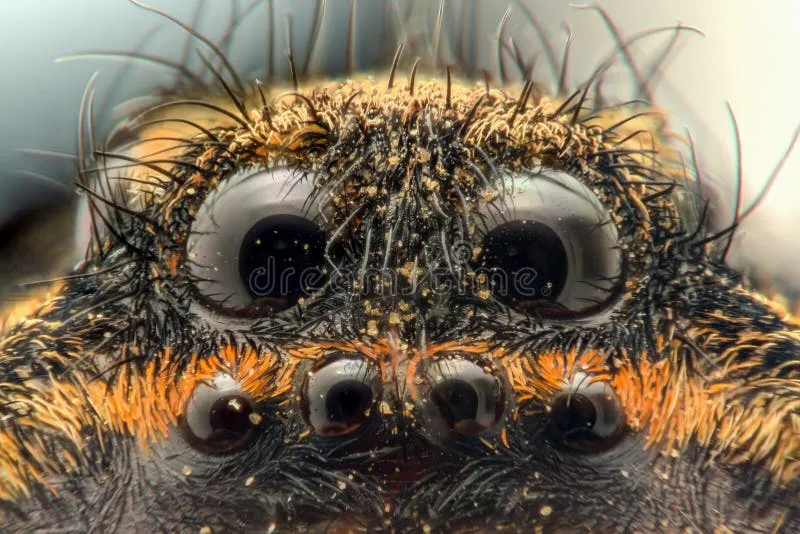
Most tarantulas have eight eyes, though the arrangement and function of these eyes differ slightly between species. This seemingly large number of eyes, however, doesn’t necessarily equate to superior vision in the human sense. Instead, the eyes are arranged to provide a broad field of view and specialized detection capabilities. The placement of these eyes on the carapace, the hard shell on the top of the cephalothorax (the combined head and chest), is a key feature, allowing tarantulas to perceive their surroundings with a degree of efficiency that complements their other senses.
The Primary Eyes

The primary eyes are typically located in the front of the cephalothorax. These eyes are the main focus of image formation, however, tarantulas do not have very good image formation. The primary eyes are used for detecting light and movement, and contribute to the tarantula’s ability to perceive its environment. While they might not have the sharpness of human vision, these eyes provide the tarantula with essential information about its surroundings, helping it identify potential threats or the movement of prey. These eyes are crucial for the initial assessment of the environment.
The Secondary Eyes
The secondary eyes are positioned around the primary eyes. They are mostly used for detecting the movement of prey or predators. These eyes are particularly sensitive to changes in light and shadow, which is a critical element in the tarantula’s hunting and defensive strategies. The arrangement of the secondary eyes provides a broader field of vision, allowing the tarantula to perceive threats from multiple directions. They are very helpful for tarantulas to be able to escape from any situation that threatens them.
The Function of Tarantula Eyes
The function of a tarantula’s eyes is a fascinating aspect of their biology. While they may not see the world with the same clarity as humans, their vision is perfectly adapted to their needs. The eyes are not just for seeing images; they play a crucial role in detecting movement, distinguishing light and shadow, and, consequently, in hunting and evading predators. Tarantulas primarily rely on their eyes for detecting motion, helping them determine when to strike at prey or retreat from danger. The eyes function in a coordinated system that allows the spider to make the most of its visual information.
Detecting Light and Shadow

Tarantula eyes are particularly adept at detecting variations in light and shadow. This ability is critical in their nocturnal or crepuscular lifestyle, where they often hunt during the dim light of dawn and dusk. The sensitivity to light and shadow helps them identify potential prey or predators, even in low-light conditions. This ability to discern changes in light levels allows them to remain hidden in the shade, waiting for the opportune moment to ambush prey. They can easily camouflage themselves to the environment. They can also stay away from the sun to keep their body moisturized.
Sensing Movement and Predators
Perhaps the most crucial function of tarantula eyes is the ability to sense movement. The ability to detect even the slightest motion is essential for both hunting and self-preservation. Tarantulas can quickly identify potential prey based on movement, enabling them to launch a successful ambush. This ability is also vital for detecting predators, providing them with the opportunity to flee or defend themselves. This ability gives them an advantage in their environment and has led to the success of these animals for millions of years.
Vision and Hunting
Tarantulas are ambush predators, and their vision plays a pivotal role in their hunting strategy. They do not actively chase their prey; instead, they rely on their ability to detect movement and accurately judge distance. This strategy enables them to conserve energy and increase their chances of a successful hunt. By patiently waiting, the tarantula is able to strike when the opportunity arises. The tarantula’s visual system, coupled with its other sensory capabilities, makes it a highly efficient hunter in its natural habitat.
Visual Acuity and Prey Detection

While tarantulas don’t have extremely sharp vision, their visual acuity is adequate for detecting and identifying prey at a reasonable distance. They can discern the size, shape, and movement of potential meals, helping them to decide whether to attack. The ability to assess prey from a distance is crucial for both hunting efficiency and the tarantula’s safety. They can avoid confrontations with prey that may be too dangerous. Their eyesight contributes a lot to their survival.
Eyesight and Navigation
Tarantulas use their vision for navigation, primarily to orient themselves in their environment. This is especially important for species that build burrows or webs, as they need to be able to return to their shelter or foraging spots. Their visual system helps them to recognize landmarks and navigate their territories, ensuring that they don’t get lost. They are also able to navigate without their vision; other senses will also help them, especially during the night. It’s a very important aspect for their survival.
Eyesight in Different Tarantula Species
The visual capabilities of tarantulas can vary depending on their species and the environment in which they live. Some species have adapted to specific conditions, resulting in differences in their eyesight. For example, the vision of arboreal tarantulas might differ significantly from that of terrestrial species. These variations highlight the adaptability of tarantulas and the influence of environmental factors on their sensory systems. Each tarantula is able to adapt to the environment they live in.
Terrestrial Tarantulas

Terrestrial tarantulas, which live on the ground, typically have a visual system that is well-suited for detecting movement and sensing the presence of potential predators or prey at ground level. Their eyes are often positioned to provide a wide field of view, allowing them to scan their surroundings effectively. These tarantulas rely heavily on their eyesight to locate potential threats, such as birds or other animals. Their visual adaptations are crucial for their survival in a ground-dwelling habitat.
Arboreal Tarantulas
Arboreal tarantulas, which live in trees, have vision adapted to their elevated lifestyle. Their eyes are often positioned to provide a broader view of their surroundings from above, aiding in the detection of prey and predators in the trees. This helps them to judge distances accurately when jumping or ambushing prey. Their ability to perceive depth and movement from their elevated vantage point is extremely important for their survival in the treetops. In comparison to terrestrial tarantulas, they have very different eyesight adaptations.
The Significance of Eyes in Tarantula Survival
A tarantula’s eyes are integral to its survival, playing a crucial role in its daily life. From hunting and navigating to avoiding predators and attracting mates, their visual capabilities are essential. The way they perceive the world through their eight eyes, despite not having the sharp vision of some other animals, is perfectly tailored to their needs. The evolution of their visual system highlights the importance of sensory adaptation in the animal kingdom and contributes to the tarantula’s success as a species. The eyesight of these animals have allowed them to survive for millions of years.
Defense Mechanisms and Eyesight

The eyesight of tarantulas is vital for their defense against predators. Their ability to detect movement and shadows allows them to quickly identify and react to threats. Depending on the species, tarantulas may use various defense mechanisms, such as biting, flicking urticating hairs, or attempting to flee. Good eyesight is essential for the successful implementation of these defensive strategies. It is a very important part of their survival to be able to know when to attack and when to retreat.
Eyes and Their Role in Mating
Eyes also play a role in mating behavior for some tarantula species. Males often use visual cues, like specific movements or displays, to attract females. While pheromones and other sensory inputs are also involved, eyesight helps in the initial recognition and courtship phases. In some species, the male tarantula’s appearance and movements during mating are visually striking, providing a visual signal to the female. Eyesight is key to attracting mates in these spiders.
Conservation and Tarantula Eyesight
Understanding the role of eyes in tarantula survival is crucial for conservation efforts. Protecting their habitats and minimizing threats can ensure that these fascinating creatures continue to thrive. Research into the tarantula’s sensory systems can help in developing conservation strategies and understanding their specific needs. By appreciating their unique visual adaptations and the significance of their eyes, we can help protect the tarantula and its habitat for years to come.