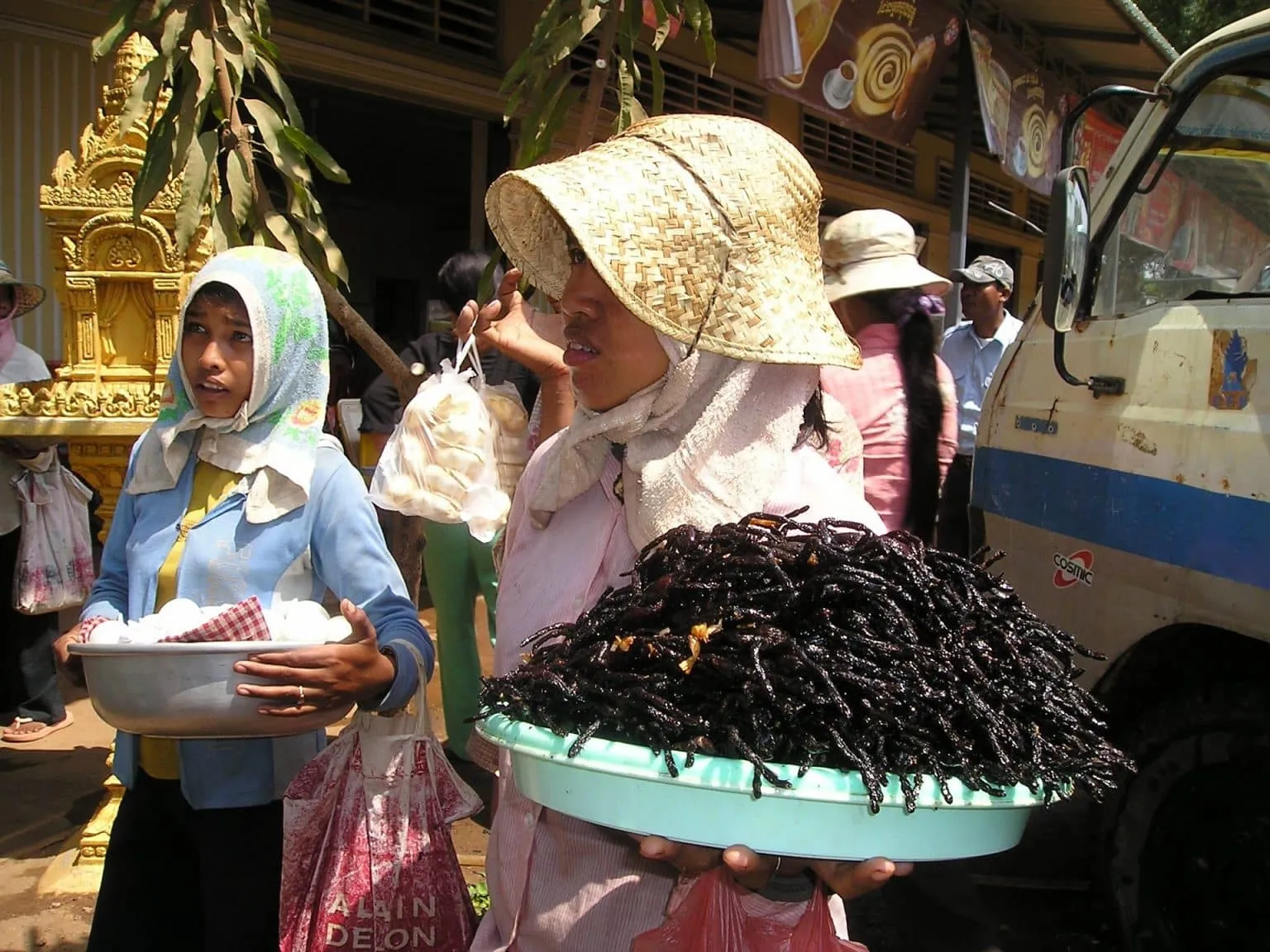
What are Fried Tarantulas in Cambodia?
Fried tarantulas, or ‘a-ping’ as they’re known in Cambodia, are a popular street food and delicacy in the country, particularly in the town of Skuon. These are not your average snack; they are whole tarantulas, deep-fried in oil, and seasoned with salt, sugar, and sometimes chili. The practice of eating spiders has historical roots, and it continues to be a unique culinary experience that attracts both adventurous eaters and curious tourists. These spiders are a staple food for many Cambodians and are seen as a source of protein and an affordable meal. The tarantulas are typically caught from the wild, prepared, and then sold at markets or food stalls. This unusual dish offers a distinctive flavor profile and texture that sets it apart from other foods.
The Origin of Fried Tarantulas
The origins of eating fried tarantulas in Cambodia are multifaceted, with a blend of historical circumstances and cultural adaptations. During the Khmer Rouge regime in the 1970s, food scarcity was rampant, and people were forced to find alternative sources of sustenance. Spiders, being readily available, became a part of the diet out of necessity. This practice continued even after the regime, with tarantulas becoming a common food source. Today, the tradition continues not just due to historical reasons but also because of their unique taste and cultural value. The practice is now a cultural icon that is part of the history of Cambodia and has become something of a tourist attraction.
The History of Spiders as Food

The consumption of spiders is not unique to Cambodia; various cultures around the world have, at some point, included spiders in their diets. In the Amazon, certain spider species are cooked and eaten. In some parts of Africa, tarantulas are roasted or fried as well. These practices often arise when alternative food sources are scarce. The history of eating spiders reflects human adaptability, with cultures using whatever resources are available to survive. The methods of preparation and the species consumed can vary significantly, but the underlying reason often remains the same: a quest for sustenance, sometimes driven by necessity, and sometimes due to established cultural traditions.
Why Fried Tarantulas are Eaten
Fried tarantulas are eaten for several reasons. Primarily, they are a source of protein and nutrients, especially in areas where traditional food sources may be limited or expensive. Eating fried tarantulas is also a cultural practice. It is a way to preserve traditional food practices, and in some cases, eating spiders may be seen as a sign of cultural pride. The culinary aspect is a significant factor, with the unique taste and texture attracting both locals and tourists. The crispy exterior and soft insides offer an unusual and memorable eating experience. The dish is also relatively affordable and accessible, contributing to its popularity.
Where to Find Fried Tarantulas in Cambodia
The best place to find fried tarantulas is in Cambodia, specifically in Skuon, a small town in Kampong Cham province. Skuon is known as the ‘spider town’ and is a central hub for the trade and consumption of these arachnids. Street food stalls and local markets in Skuon offer freshly fried tarantulas. Other locations, such as Phnom Penh, may offer fried tarantulas, but they are less common. Local markets are another ideal place to find them. Always look for stalls where the spiders are freshly prepared to ensure the best experience and taste. You may also find them in some local restaurants that specialize in traditional Cambodian cuisine, though this is less common.
Best Places for Fried Tarantulas

Skuon is the quintessential place to sample fried tarantulas. The central market in Skuon is the best place to begin. It’s the heart of the spider trade. Here, you can watch the tarantulas being prepared, fried, and served. Vendors line the streets, offering a freshly made experience. In Phnom Penh, you can find them in some of the local markets and a few street food vendors, but the experience is not the same as in Skuon. The quality and freshness can also vary. Make sure to check reviews before consuming any street food. Another alternative is Kampot which offers a unique take on the experience. Some restaurants also offer them on their menus, but it might be more of a tourist-oriented experience.
How Fried Tarantulas are Prepared
Preparing fried tarantulas is a simple yet precise process that results in a crunchy exterior and a soft, flavorful interior. The process starts by cleaning the tarantulas, removing the fangs and sometimes the internal organs. The tarantulas are then seasoned with a mixture of salt, sugar, and sometimes chili. After this, they are deep-fried in oil until the legs and body become crispy. The oil must be hot enough to cook the tarantula evenly without burning it. The entire process is done quickly and efficiently, to keep them fresh and tasty. The seasoning and frying process ensures that the tarantula achieves its characteristic taste and texture.
Preparing the Tarantulas
The tarantulas must first be cleaned to prepare them for frying. This involves removing the fangs, which can be a safety precaution, and sometimes, removing some internal organs. This step is usually handled by vendors. The tarantulas are sometimes soaked in a marinade of spices to enhance their flavor. This allows the flavors to penetrate and give the spiders a more delicious flavor. The quality and freshness depend on the attention to detail. This step is usually completed before the frying process.
Frying Process

The frying process involves heating oil to a certain temperature, typically around 350°F (175°C). The seasoned tarantulas are then deep-fried in the hot oil. It only takes a few minutes for them to cook, usually about 5-7 minutes, until they turn a deep golden-brown color. The oil must be hot enough to cook the exterior to a crisp and keep the inside moist. The fried spiders are removed from the oil and drained to remove excess oil. The resulting dish is a crunchy, flavorful delicacy, ready to be enjoyed.
What Do Fried Tarantulas Taste Like?
The taste of fried tarantulas is often described as a unique and multi-layered experience. The exterior is typically crispy and crunchy, with a slightly nutty flavor due to the frying process. The body has a soft, almost creamy texture, and the taste is often compared to a mix of chicken and crab. Some people also say that the abdomen can have a slightly bitter taste, while others say it’s the tastiest part. The seasoning adds a sweet, salty, and sometimes spicy flavor profile. The legs and body offer a different flavor and texture that is very different from the abdomen. Overall, the taste profile is complex and intriguing.
Texture and Flavor Profile
The texture of the fried tarantula is a key part of the dining experience. The crispy, crunchy exterior contrasts with the soft, often creamy interior of the body. The legs are usually the crispiest part, while the abdomen offers a different textural experience. Flavor-wise, the tarantula has a distinct umami taste. The flavor profile is a mix of savory, sweet, and sometimes spicy notes, due to the seasoning and frying process. The taste will also depend on the freshness of the spider and how it was prepared. The combination of textures and flavors makes this street food a truly unique culinary experience.
Nutritional Value of Fried Tarantulas

Fried tarantulas have some nutritional benefits. They are a good source of protein, which is essential for muscle development and overall health. They contain essential amino acids, which support various bodily functions. The nutritional composition also includes fats, which help in energy and other body functions. They are also a source of micronutrients, such as vitamins and minerals, though the specific quantities can vary. The nutritional content can vary depending on the size of the spider and how it was prepared. It is worth remembering that it’s still a fried food, so it will be high in fat.
Health Benefits and Risks
There are potential health benefits to eating fried tarantulas. The high protein content is beneficial for muscle building and overall health. The fat content provides energy and supports various body functions. The vitamins and minerals found in the spider also contribute to health. However, there are also some health risks. The frying process can increase the fat content, which could be a concern. There’s also a risk of consuming pesticides, or contaminants if the tarantulas are not sourced from a clean environment. Those with allergies to shellfish may also experience cross-reactivity, so it is recommended to be careful. The risks are usually minimal if you get them from a reputable source.
Cultural Significance of Fried Tarantulas
Fried tarantulas hold significant cultural importance in Cambodia, particularly in the local areas where they are consumed. Eating spiders is seen as a symbol of Cambodian resilience and ingenuity, reflecting the historical context of food scarcity. The dish is a source of cultural pride and identity, often seen as a unique and traditional food. It is a symbol of community and shared heritage, and families pass down preparation methods. For some, consuming fried tarantulas is a part of their cultural identity. It is a visible expression of cultural heritage that connects the past and present.
Fried Tarantulas and Cambodian Culture

Fried tarantulas are intertwined with the daily life and cultural identity of many Cambodians. In the town of Skuon, the fried tarantulas are not just a food item but also a source of income for many families. The markets that sell these spiders are social hubs. It is a place to meet, chat, and enjoy the local culture. The practice has become a part of many celebrations. It also plays a role in the local economy, providing employment in spider catching, preparation, and sales. Fried tarantulas offer a tangible connection to Cambodia’s past. Eating them is often viewed as a way to embrace and celebrate Cambodian heritage.
Experiencing Fried Tarantulas in Cambodia
Experiencing fried tarantulas in Cambodia goes beyond simply eating a unique dish; it is an immersion into local culture. When visiting Skuon, you can witness the spiders being prepared at street stalls, interact with local vendors, and learn about the history and preparation methods. Visiting a market allows travelers to engage with the local culture and sample other Cambodian delicacies. Participating in this cultural experience can transform your perspective on food and travel. It is a chance to challenge yourself and expand your culinary horizons, making the trip even more memorable. The locals are generally welcoming and happy to share their culture.
Best Way to Eat Fried Tarantulas
The best way to eat fried tarantulas is to embrace the experience and approach it with an open mind. You can start by trying a small portion to gauge your personal preference. Hold the tarantula by its body or legs and take a bite, savoring the different textures and flavors. Some people eat the entire spider, including the legs, body, and abdomen, while others may prefer to eat only certain parts. Locals typically eat the entire spider. It’s best to eat it warm or hot, as the flavors are most enjoyable. Pair the tarantulas with a cold beverage. This experience is more than just food, it is about enjoying the culinary curiosity.
Tips for Travelers

If you’re traveling to Cambodia to try fried tarantulas, there are a few tips to enhance your experience. Visit Skuon to ensure authenticity and freshness, and try the spiders from local vendors. It is always better to ensure the spiders are prepared in a clean and hygienic manner. Ask for recommendations from locals to find the best places to eat and ensure your safety. Try other local dishes to enhance your culinary journey. Be respectful of local customs and be open to trying new things. Be sure to bring a camera to capture this unique experience. Most importantly, have an open mind and enjoy the adventure.
The Future of Fried Tarantulas in Cambodia
The future of fried tarantulas in Cambodia is closely tied to the tourism sector and local culinary practices. As tourism in Cambodia grows, the popularity of fried tarantulas is expected to continue, attracting more visitors eager to experience this unique food. Efforts will be made to ensure sustainable sourcing practices to maintain supply. The preservation of traditional cooking methods and passing them down to future generations is important. Educating tourists and locals about the dish’s cultural significance can ensure its longevity. It is a food that is both a cultural icon and a culinary curiosity, and it will hopefully continue to be enjoyed.