What are Army Ants?
Army ants, also known as legionary ants, are a fascinating group of ants characterized by their aggressive predatory behavior and nomadic lifestyle. Unlike most ant species that build permanent nests, army ants create temporary nests, often called bivouacs, which are formed from their own bodies. These ants are found primarily in tropical and subtropical regions around the world, and they are renowned for their massive colonies, which can contain hundreds of thousands, even millions, of individual ants. Their name derives from their organized, military-like foraging tactics, which involves coordinated attacks on prey, including insects, small vertebrates, and even other ant colonies. This coordinated strategy allows them to overcome prey much larger than themselves. The relentless pursuit of food is a driving force in their existence, and their impact on the ecosystems they inhabit is significant.
Army Ant Characteristics
Army ants possess several unique characteristics that set them apart from other ant species. They are typically blind, relying heavily on pheromones to navigate and communicate within their colonies. This lack of vision is compensated by their highly developed sense of smell, which enables them to locate prey and maintain the complex social structure of their colonies. The worker ants are typically of uniform size, around 1/8 to 1/2 an inch long, and they possess powerful mandibles, which are used for both defense and dismembering prey. The queen ant is significantly larger than the workers, playing a crucial role in reproduction and colony maintenance. The queen can lay millions of eggs during her lifetime, ensuring the continuation of the colony. Another critical characteristic is their migratory behavior, with colonies regularly relocating to new foraging grounds.
Army Ant Behavior

Army ant behavior is highly specialized and reflects their social organization and predatory lifestyle. They forage in massive columns, which can extend for many yards, searching for food. These columns are composed of worker ants, which are organized into different roles. Some ants are scouts, finding new food sources, while others are soldiers, defending the colony and attacking prey. When a food source is located, the ants quickly swarm the target, overwhelming it with sheer numbers. Their behavior is also influenced by environmental factors, such as temperature and humidity, which can affect their foraging activity. The nomadic lifestyle of army ants also has a significant impact on their behavior, as they must constantly relocate their colonies to find new resources. This requires efficient communication and coordination within the colony.
Tarantula Overview
Tarantulas are large, hairy spiders that are found in various habitats around the world. These arachnids are known for their imposing size, with some species having leg spans exceeding 10 inches. They are typically nocturnal hunters, preying on insects, small reptiles, and even small mammals. They are equipped with fangs that inject venom to paralyze their prey. Tarantulas are solitary creatures, often living in burrows or under rocks, and they have a relatively long lifespan, sometimes living for decades. Their bodies are divided into two main sections: the cephalothorax, which contains the head and thorax, and the abdomen, which houses the internal organs. They have eight legs, and most species also possess spinnerets, which are used to produce silk for creating webs and lining their burrows. Despite their intimidating appearance, tarantulas are not typically aggressive towards humans, and their venom is usually not life-threatening.
Tarantula’s Role in the Ecosystem
Tarantulas play a significant role in their ecosystems as predators, helping to control populations of insects and other small animals. They are also prey for other animals, such as birds, snakes, and lizards, which helps to maintain a balanced food web. By consuming a variety of prey, tarantulas contribute to nutrient cycling within their habitats. The presence of tarantulas can indicate a healthy ecosystem, and their survival is often dependent on the preservation of their habitats. Their feeding habits also influence the distribution and abundance of their prey species. Tarantulas also serve as food sources for various animals, making them a critical part of the ecosystem. Their burrows can also impact the soil structure, affecting other organisms that live in the soil.
Tarantula vs. Army Ants

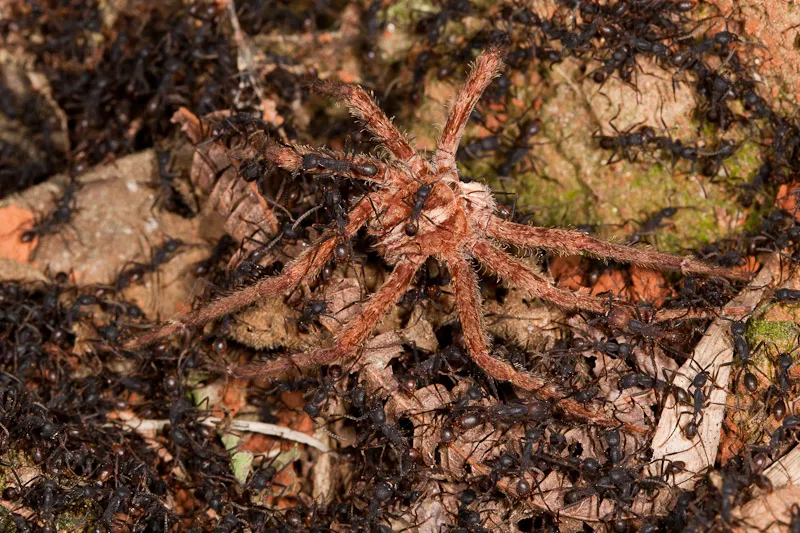
The confrontation between a tarantula and a swarm of army ants is a dramatic event, showcasing the power of numbers and the relentless hunting tactics of the ants. While tarantulas are formidable predators, they can be vulnerable to the coordinated attacks of army ants. The ants’ sheer numbers and aggressive behavior often overwhelm the spider, leading to its demise. The size difference and the tarantula’s defenses (fangs, venom, and hairs) are not always sufficient to protect it from the relentless assault of the ants. This interaction highlights the importance of ecological balance and the interplay between predator and prey. The outcome often depends on the size of the tarantula and the size of the army ant colony, as well as the environmental conditions and the specific strategies employed by each participant in the battle. This deadly encounter is a brutal example of nature’s survival strategies.
Army Ant Hunting Strategies
Army ants employ several hunting strategies that are critical to their success in preying on larger animals, including tarantulas. They utilize a coordinated approach, with a large number of ants overwhelming the prey. The ants swarm the target, biting and stinging simultaneously, effectively paralyzing and eventually killing it. They also use pheromone trails to guide their foraging columns, ensuring efficient access to food sources. Their mandibles are powerful, used for both holding onto prey and tearing it apart. Furthermore, they adapt their strategies depending on the prey type, which shows intelligence and an understanding of the prey’s vulnerabilities. This collaborative strategy allows them to take down prey that would be impossible for a single ant to defeat. Their hunting techniques are highly effective, making them one of the most successful predators in the insect world.
The Initial Attack
The initial attack is critical for army ants. It starts with the scouts locating the tarantula, followed by the rapid deployment of a large number of ants. The initial surge is designed to overwhelm the spider’s defenses quickly. The ants attack the legs and other vulnerable parts of the tarantula to immobilize it, making it easier to control. They use their mandibles and stingers to inflict multiple wounds. The element of surprise is also used to their advantage. The first wave of attackers sets the stage for the rest of the colony to move in and complete the hunt. The coordinated nature of the initial attack ensures that the tarantula’s defenses are quickly overwhelmed, starting the process of incapacitation and death.
Overwhelming the Tarantula
Once the initial attack is underway, the ants focus on overwhelming the tarantula with sheer numbers. The sheer size of the colony is the main weapon. The ants will completely cover the tarantula, biting and stinging in unison. They target the spider’s eyes, legs, and other soft body parts to disable it quickly. The tarantula’s attempts at defense, such as kicking hairs or biting, are ineffective against the swarm. The relentless and overwhelming attack reduces the spider’s ability to move and defend itself. This leads to exhaustion and ultimately, to the tarantula’s demise. The coordinated attack from all sides ensures complete coverage, making escape almost impossible.
Dissecting the Prey
After the tarantula is subdued, the army ants begin the process of dissecting their prey. Using their powerful mandibles, the ants tear the tarantula apart. This process is highly efficient, allowing the ants to access the tarantula’s internal organs and tissues. The ants meticulously dismantle the spider, segment by segment. This process of dismemberment is crucial for transporting the food back to the colony and for feeding the larvae. The dissection is also a crucial step in nutrient extraction. The ants’ ability to efficiently process and consume the tarantula provides vital sustenance for the entire colony.
Why Army Ants Hunt Tarantulas
Army ants hunt tarantulas for several reasons, primarily driven by their need for sustenance and the control of the local environment. Tarantulas provide a significant source of food, rich in nutrients, which supports the colony’s growth and reproduction. The ants do not discriminate their food and eat other animals. They are constantly on the move, hunting for food and creating a cycle of life and death in the wild. This also keeps the population of the ecosystem in check. By preying on tarantulas, they also help regulate the spider’s population, which can have broader impacts on the ecosystem’s balance. The availability of tarantulas as prey can also influence the ants’ foraging behavior and their nomadic patterns. The ants will seek food when they have to, this is one of the main reasons for their behavior and survival.
Nutritional Benefits

Tarantulas are a valuable source of nutrition for army ants, offering a rich supply of protein, fats, and other essential nutrients. The nutritional content in tarantulas aids in the growth and development of ant larvae, which in turn supports the colony’s population. The ants also obtain essential vitamins and minerals from the spider. This nutrition is essential for maintaining the ants’ energy levels and their ability to carry out their hunting and foraging activities. The nutrients are important for the survival of the colony, which will ensure that the cycle of the ecosystem remains in balance. The nutritional benefits of tarantulas contribute to the overall health and productivity of the army ant colony, which reinforces their success in the wild.
Population Control
Army ants also contribute to population control by preying on tarantulas. They help regulate the spider’s population within their habitats. This can prevent tarantula populations from becoming too large, which could disrupt the balance of the local ecosystem. By keeping the population of tarantulas in check, they prevent over-consumption of other species. This indirect regulation has positive impacts on the overall diversity of the ecosystem. This form of natural regulation can also prevent imbalances within the food web, ensuring that no single species dominates the ecosystem. The role of army ants in controlling the population of tarantulas demonstrates the intricate connections in the natural world.
The Aftermath: What Happens Next?
After an army ant colony consumes a tarantula, the ants will transport the remains of the tarantula back to their bivouac or temporary nest. The nutrients and energy obtained from the tarantula will be distributed among the ants. The aftermath provides a crucial source of nutrients, contributing to the overall health and productivity of the colony. Any remaining parts will be scavenged by other organisms in the environment, which will further contribute to the cycling of nutrients in the ecosystem. The location of the encounter may also be impacted, with the potential changes to the local environment that follows. Ultimately, the cycle of predation by army ants continues, shaping the dynamics of the ecosystem.